Articles
Longer reads that go a bit deeper than the episodes — career, school, money, health, and whatever else we're thinking through.

Fusion's Tungsten Wall Has a Helium Problem
Tungsten can withstand enormous fusion heat loads, but helium produced and implanted during reactor operation can create nanobubbles, trap tritium, and alter the metal's microstructure. The next fusion-materials challenge is making tungsten resilient to that gradual internal damage.

The Newest Solid-State Cooler Uses Heat to Make Cold
A new elastocaloric prototype uses one shape-memory alloy to convert heat into motion and another to turn that motion into cooling. The concept could eventually make waste heat part of the refrigeration cycle instead of merely something to remove.

Diamond Is Almost the Perfect Power Semiconductor. Doping Is the Problem
Diamond has exceptional properties for high-power electronics, and 2026 devices are finally demonstrating practical switching. But the material still lacks a mature n-type doping process, leaving its semiconductor ecosystem fundamentally incomplete.

The Hard Part of a One-Nanometer Superconductor Was Keeping It Alive
Researchers have grown inch-scale monolayer niobium diselenide underneath graphene, protecting the fragile superconductor before air can degrade it. The advance is less about raising superconducting temperature than making an unusual quantum material manufacturable.

Structural Batteries Do Not Need to Beat Lithium-Ion to Matter
Structural batteries turn carbon-fiber composites into both load-bearing material and energy storage. Their cell-level energy density remains modest, but the real competition is at the system level: replacing separate structural and battery mass with one multifunctional material.

Advanced Nuclear's Fuel Problem Comes Before the Reactor
Many advanced reactors depend on HALEU, but U.S. production remains closer to demonstration scale than a mature commercial market. The bottleneck involves not only enrichment, but conversion, fuel fabrication, transportation, and enough guaranteed demand to finance the entire chain.

Autonomy Is Moving From Drones Into Full-Size Helicopters
The Army's H-60Mx Black Hawk is testing a new model of autonomy: retrofit existing full-size aircraft instead of designing every unmanned system from scratch. The result could blur the line between piloted aviation and drones while preserving existing fleets and logistics.

The Next Drone Upgrade May Be Software, Not a New Airframe
DARPA's REMA program is trying to make autonomy portable across commercial and military drones rather than designing it around one airframe. That could shift drone competition toward reusable software layers that survive even as the underlying aircraft rapidly change.

Fiber-Optic Drones Are Rewriting the Electronic Warfare Playbook
Fiber-optic FPV drones replace vulnerable radio links with physical optical cable, making traditional jamming far less useful. Their rise is pushing militaries toward layered drone defense that cannot depend on electronic warfare alone.

Chiplets Are Turning Packaging Into the New Semiconductor Battleground
Chiplets are shifting semiconductor competition away from monolithic processors toward advanced packaging and standardized die-to-die links. UCIe could eventually let companies combine specialized silicon from different suppliers, but interoperability remains much harder than simply defining a connector.

Satellites Are Replacing Radio Links With Laser Mesh Networks
Low-Earth-orbit constellations are beginning to use laser links as an orbital data backbone. The promise is faster, denser networking between satellites, but precise pointing, cloud blockage and incomplete on-orbit demonstrations show why optical mesh networks remain difficult to scale.

The Breaker Problem Holding Back Offshore DC Supergrids
Meshed offshore HVDC grids need something point-to-point links can often avoid: a way to isolate one DC fault without collapsing the surrounding network. Hybrid HVDC circuit breakers are becoming a critical piece of that future architecture.

Neodymium Competition Has Moved From Mines to Magnets
Over the past decade, competition over neodymium has shifted from simply opening mines to controlling the full permanent-magnet chain. China remains dominant, but the United States, Australia and others are now investing in processing, alloying and finished NdFeB production.

The Next Drone Revolution Is Coordination, Not Another Drone
The next major shift in military autonomy is not simply better individual drones. Air, sea, and land systems are increasingly being designed to share information and divide tasks while humans move from direct platform control toward mission-level command.

The Fiber Under a Bridge May Already Be a Structural Sensor
Researchers are turning ordinary telecom fiber already routed through bridges into dense arrays of strain sensors. The approach could make continuous structural monitoring far easier to scale, although cable coupling, access and data processing still limit what it can do.

When Sports-Betting Taxes Become College Athletics Subsidies
Direct athlete payments arrived while most Division I athletic departments were already spending more than they generated. As states route sports-wagering revenue and other public support toward athletics, college sports is becoming a public-finance issue.

Drones That Fly and Dive: Why Ducted Fans May Matter More Than Turbofans
New hybrid drones are being designed to fly through the air and operate underwater using ducted fans, switchable propellers, and other adaptive propulsion systems. The technology borrows ideas from turbofans without actually putting jet engines underwater.
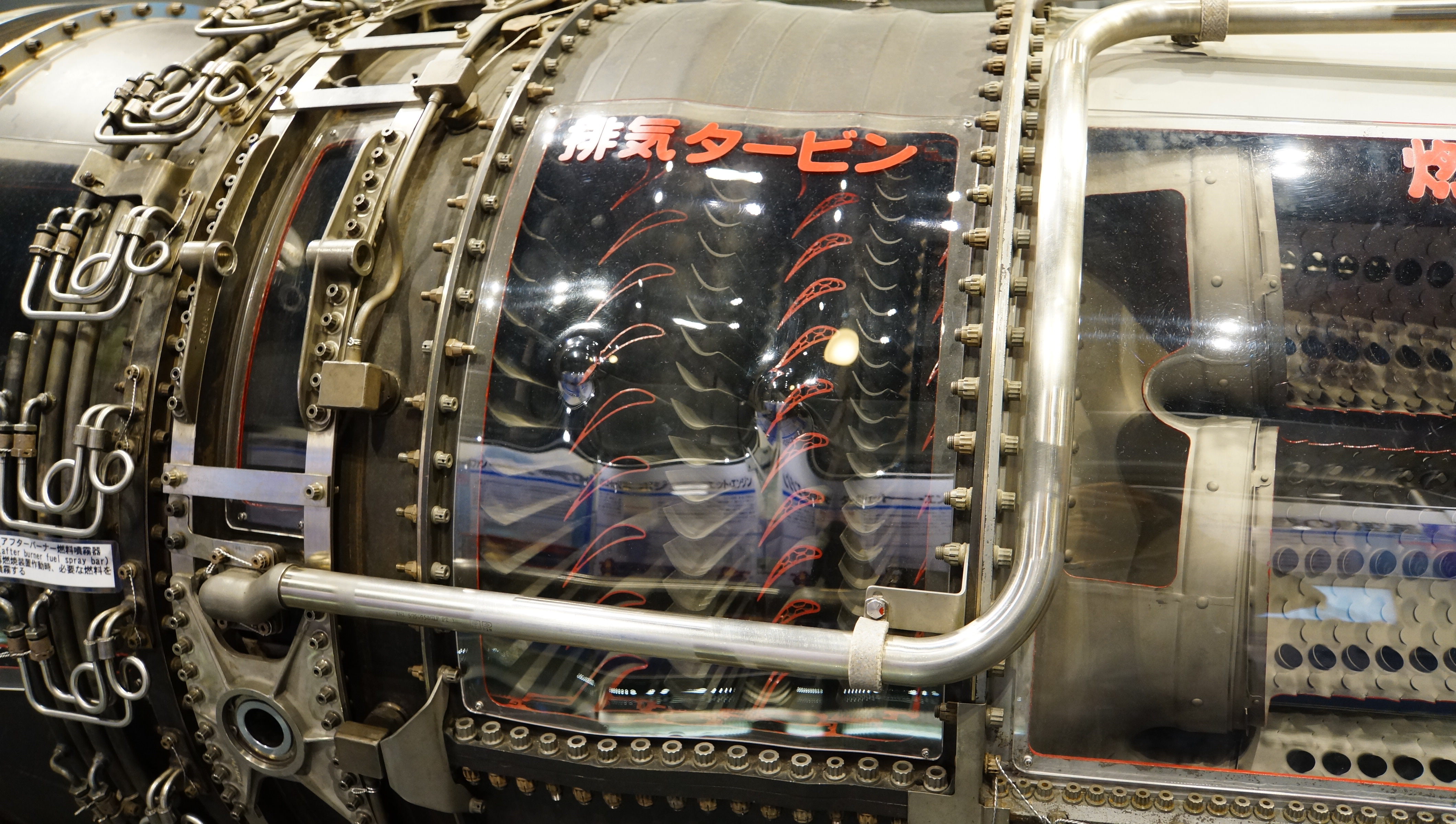
Jet Engines Should Stop Chasing Perfect Turbine-Tip Efficiency
Squealer tips can reduce turbine leakage and improve aerodynamic performance, but the same geometry can intensify local heating. Jet-engine designers should prioritize robust aerothermal performance over chasing the lowest possible leakage number.

Rare Earths Are Not Rare. Control of Them Is.
Rare earth politics is less about geological scarcity than control of processing. China’s dominance of separation and magnet manufacturing has turned a group of surprisingly common elements into a major strategic issue for the United States.