Column·
Rare Earths Are Not Rare. Control of Them Is.
By Zong-XiangAugust 13, 2026
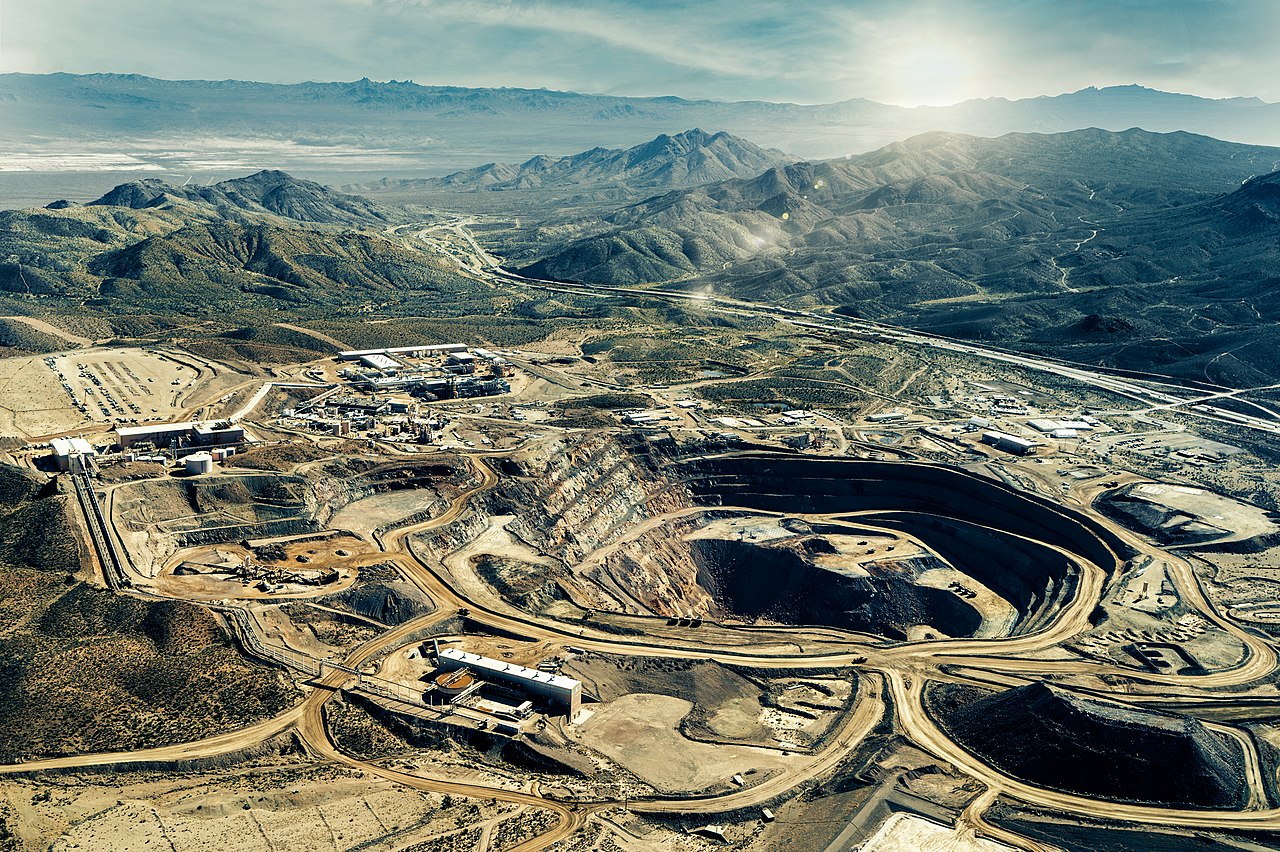
An aerial view of the Mountain Pass Rare Earth Mine and Processing Facility in California. Photo: Tmy350 / Wikimedia Commons, CC BY-SA 4.0.
Rare earth elements sit inside smartphones, electric vehicles, wind turbines, missiles, radar systems, and high-performance magnets. Yet the biggest problem with rare earths is not simply whether the world has enough of them. It is who can turn raw material into something manufacturers can actually use. Today, that question has become part of the political competition between China and the United States.
China remains the center of the rare earth supply chain. Congressional Research Service reporting estimates that China mines about 60 percent of global rare earths, separates and processes roughly 90 percent, and manufactures around 94 percent of rare-earth-based magnets. In 2025, China also imposed export controls on several rare earth elements, including samarium, terbium, dysprosium, lutetium, scandium, and yttrium. These materials have applications ranging from electronics to military guidance systems and high-temperature permanent magnets.
This creates a political problem that looks different from a normal shortage. A country can discover a rare earth deposit and still remain dependent on another country. The International Energy Agency reported that the top three countries accounted for 97 percent of rare earth refining in 2024. Even by 2030, it expects that share to remain around 92 percent. New processing projects in the United States and Malaysia have begun to reduce concentration slightly, but diversification is still slow.
One strange fact helps explain why. Rare earths are not actually especially rare. The name is partly a historical accident. The U.S. Geological Survey notes that several rare earth elements are about as abundant in Earth's crust as familiar industrial metals, while cerium is even more common than copper or lead. The real difficulty is finding deposits concentrated enough to mine economically and then separating elements that have extremely similar chemical properties. This means the strategic advantage comes less from simply owning rocks and more from controlling chemistry, processing plants, engineering knowledge, and magnet manufacturing.
The United States is now trying to rebuild those middle stages. Mountain Pass in California provides a major domestic source of rare earth ore, while government policy increasingly treats processing and magnets as national-security infrastructure rather than ordinary commodities. The political logic is straightforward: Washington does not want fighter aircraft, energy systems, or advanced manufacturing to depend on a supply chain that Beijing can potentially restrict during a confrontation.
However, replacing China is harder than opening a few mines. Processing facilities are expensive, chemically complicated, and difficult to make competitive when an established producer already operates at enormous scale. Rare earth policy therefore shows something larger about modern geopolitics. Economic power increasingly belongs not only to countries that possess natural resources, but to countries that control the obscure industrial steps between the mine and the finished product.
Sourcehttps://commons.wikimedia.org/wiki/File:Mountain_Pass_Rare_Earth_Mine_%26_Processing_Facility.jpg
Discussion
0 commentsNo comments yet. Start the conversation.